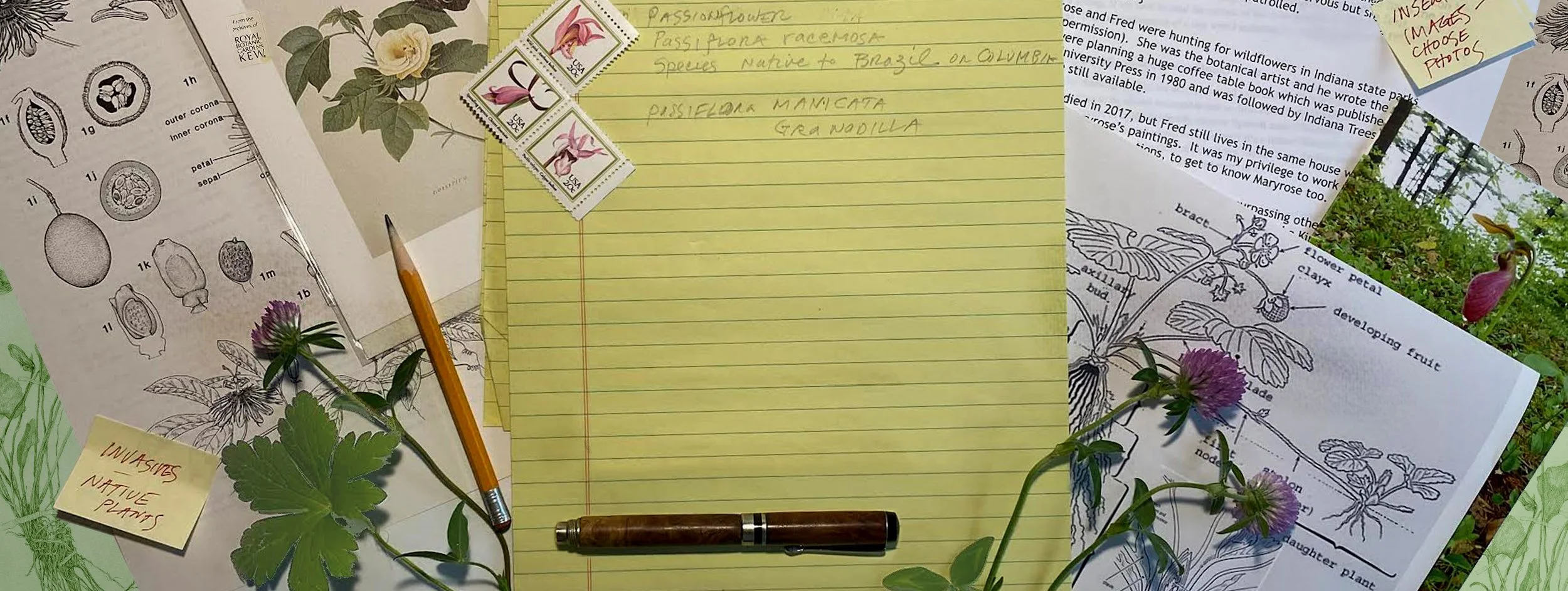
Each year Marie Brezinski considers how to use her botanical art to create beautiful gifts for her friends. In this blog, Marie shares her techniques and resources just in time for the holidays.
Meet our New NESBA Board Members
Lichen, they’re everywhere!
Massachusetts Horticultural Society Offers Certificate In Botanical Art and Illustration
Twenty years ago, botanical art classes were launched by the Friends of Wellesley College Botanic Gardens (WCBG) and taught in the WCBG Visitors center. The program was defined as ‘bringing together fine art and scientific accuracy in an integrated course of study set in Wellesley College Botanic Gardens.’ Since then, we have created a certificate program in Botanical Art and Illustration and introduced many hundreds of artists to the exacting practice of recording the beauty and wonder of the natural world.
The Miniature World of Mosses: A Closer Look
It’s hard to see a moss for what it really is. As part of an ecosystem, and in art, moss can seem like an afterthought—a sprig of parsley at the edge of an already appealing plate. But moss is so much more than harmless decoration. If we look closely at mosses we can see their diversity and also their beauty. (Continued…)
Decorative Matting for Botanical Art
Quite a few years ago, before I had the opportunity to study botanical illustration, I began collecting botanical prints to be framed as artwork for my home. When I presented the prints to a local framer, they intentionally prepared a decorative mat in the style of English botanical art framing and included bands of marbled paper and colored lines as a method of embellishing the print. At the time, I was unaware that this was a recognized technique for framing botanical art, and it was not until years later that I researched this framing technique.
Using Tinted Graphite to Illustrate Nature
Picking Apples in Geneva
Many botanical artists took note of the beautiful United States Department of Agriculture (USDA) catalog of American fruits and nuts when it was published in 2021 by Atelier Editions. The catalog contains selections from the 7,500 watercolor paintings commissioned by USDA’s Division of Pomology from 1886 to 1942. In addition to apples, which comprise over half of the USDA’s watercolor collection, it contains citrus, berries, melons, and drupes, even nuts, and it illuminated the work of many female artists.
Because my final project in the Wellesley Friends Botanical Program is apples, I bought the book immediately. (Continued…)
Member Spotlight on Faye Van Wert
President's Corner - Meet the New NESBA Board Members
September is a time of many transitions - summer turns to fall, school begins, work replaces vacations - and NESBA held its annual meeting on September 15. The Board of Directors noted our solid financial position, our robust membership of 220, this past year’s programming highlights and the work of the Exhibits Task Force…