NESBA Framing and Packaging Guidelines
Defects in framing and packaging are often encountered when work is submitted for an exhibit. These defects impact how your piece will look in the exhibit, its safety during transport and whether it can be hung at all.
We are asking everyone, whether new to exhibiting or not, to view this short video in which Sarah Roche explains the fundamentals and importance of proper framing and packaging.
Artists exhibit at their own risk and the artist is responsible for secure framing and suspension. NESBA reserves the right to decline any submission, or to remove a selected work, if it does not conform to the exhibition theme or fails to meet any of the exhibit guidelines.
Click here for a printable version of Framing and Packaging Guidelines
Framing
Use wood frames. Do not use metal frames. Frame color should be light, medium, or gold.
Work must be framed with Plexiglas - no glass.
Mats should be white or off-white.
Tape the back of the painting using painter’s tape or framer’s tape to securely affix your painting in the frame. This is especially important if your frame has turn buttons which can become loose. Your artwork will fall back from the frame when hung which diminishes the quality of your work and the show.
Hangers MUST BE D-rings. No screw eyes or sawtooth hangers.
D-rings should be placed 1/3 from the top of your work. Click here to view a video on attaching D-rings and attaching wire to a D-ring (2:30).
Make sure the wire is taut and will not show above the frame when hanging.

Examples of acceptable frames
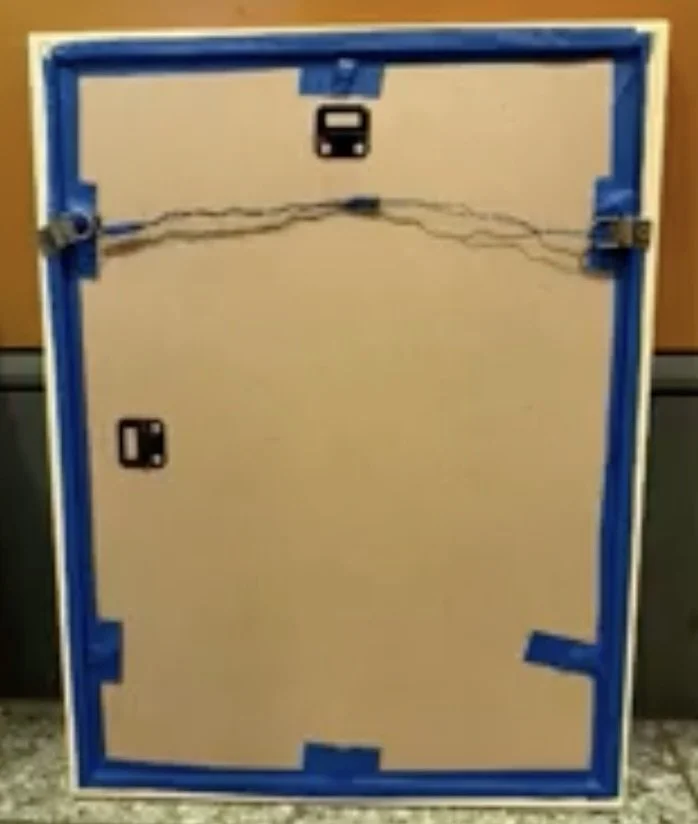
Artwork and turn buttons taped securely to frame with painter’s tape.
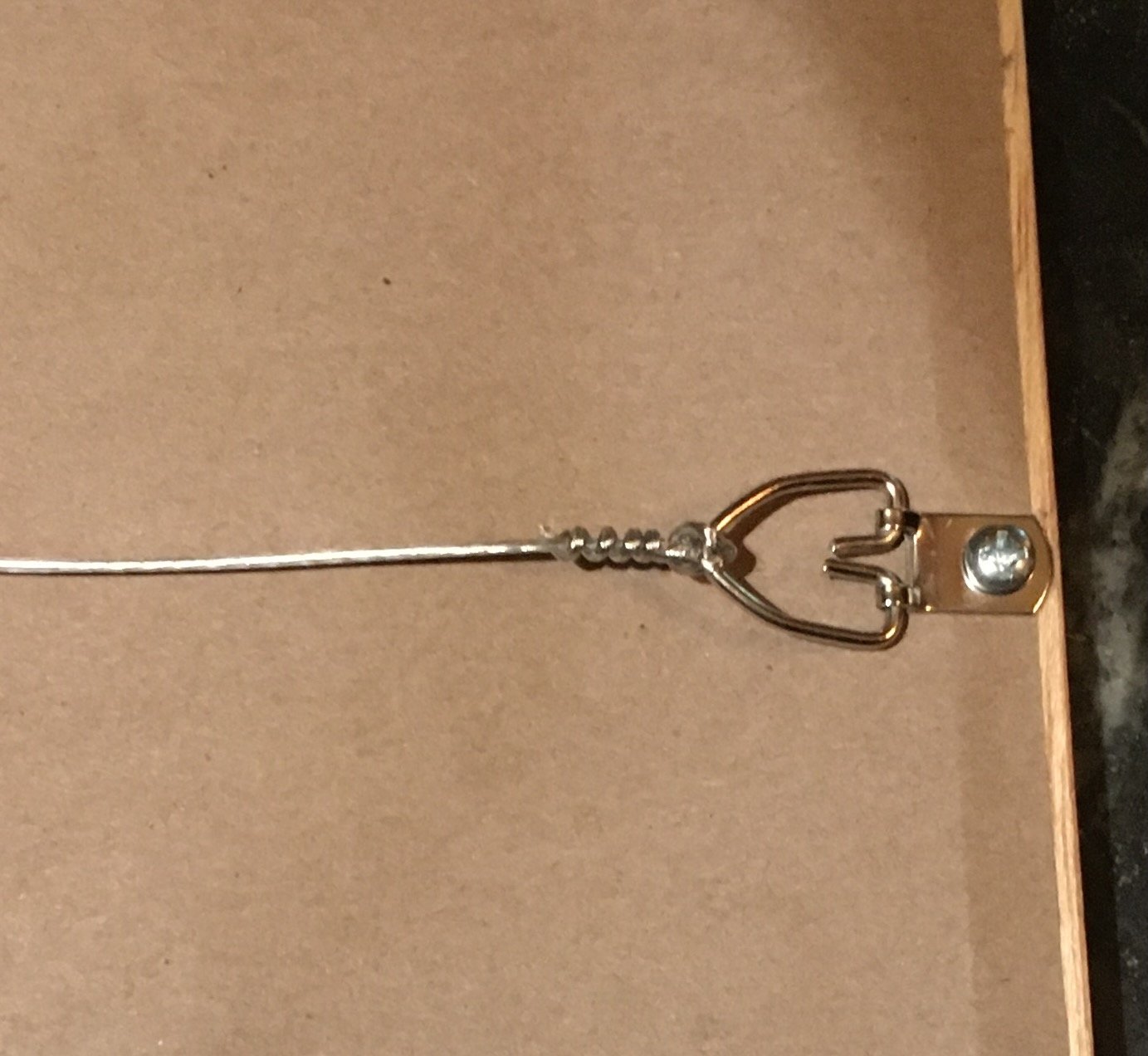
D-ring - frame is covered with paper in this example
Labeling
Print and complete two exhibit labels. Click here to download a printable version of two labels.
Attach one label to the back of your artwork in the lower corner.
Attach the second label to the front of your packaging envelope.
Packaging
You are creating a secure envelope for transportation of you work.
We recommend a new packaging material that is sturdy and easy to reuse. It is called Double Reflective Insulation Radiant Barrier and is available at Home Depot and other hardware stores in 24” and 48” widths You may also use bubble wrap, provided you make an envelope with it as described below.
Cut a piece of wrapping material wide enough to contain your painting and long enough to go around your painting 2.5 times.
Leave 1-2 inches on each side so the painting slips in and out of the envelope easily.
Fold the bottom up to cover the painting and tape the sides together securely with clear shipping tape or duct tape. If using bubble wrap, bubbles should be on the OUTSIDE.
Seal the top flap with removable tape such as blue painters' tape.
Affix one label to the front of the envelope with clear shipping tape.
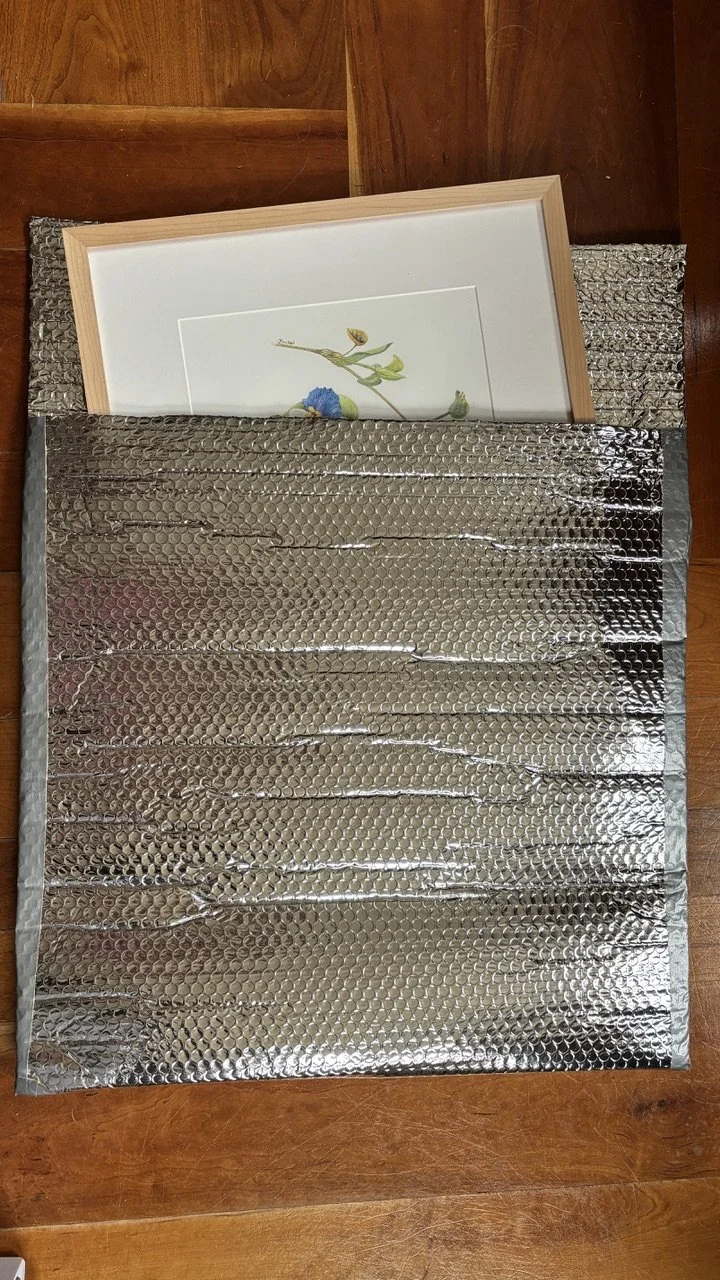
Leave room on the sides for the painting to slip in and out easilly. Use packing tape or duct tape to secure the sides.
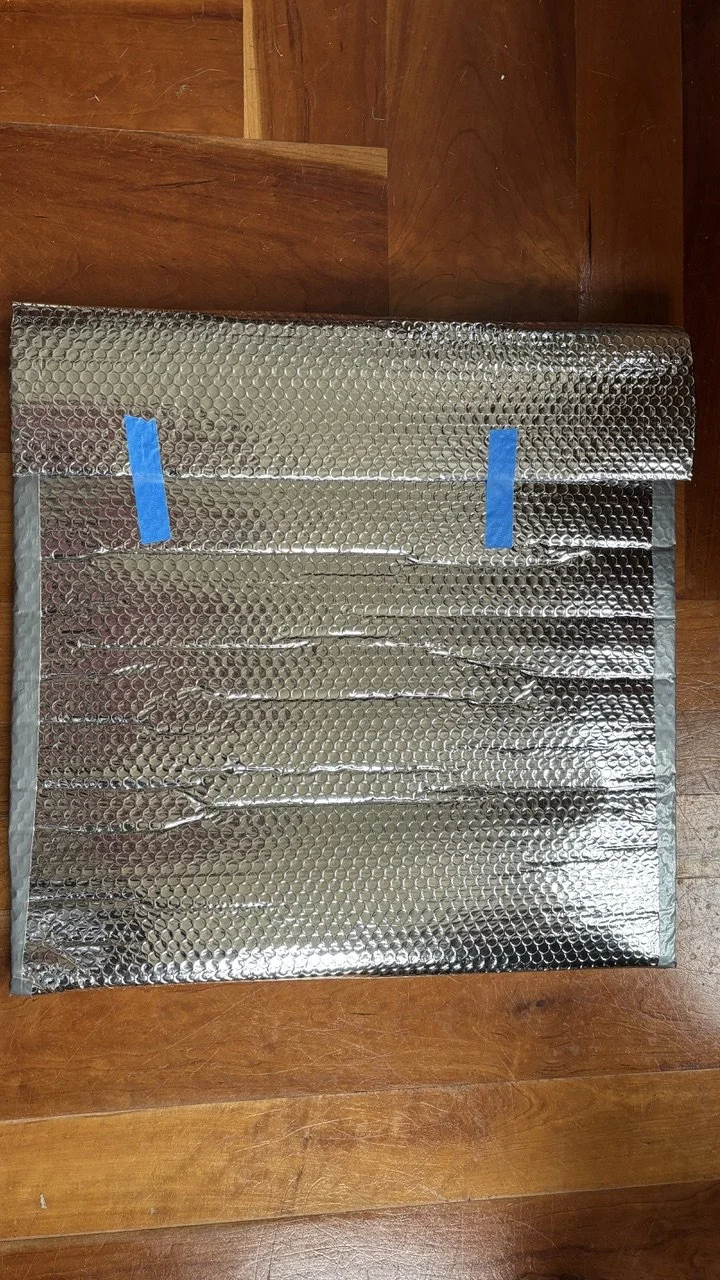
Use removable tape such as blue painter’s tape to secure the envelope flap. Affilx one label to the front of the envelope with clear shipping tape
Transportation
NESBA transportation volunteers collect artwork by geographic region and drop-it off at the exhibit venue. The process is reversed for return of your work. Artworks are handled with all possible care. Artists exhibit at their own risk and NESBA members shall not be liable for any loss or damage to artwork while in their possession. The exhibit venue may provide insurance coverage of the artworks while on-site, which will be stated in the Call for Entries.
You will indicate your regional contact person on the Intent to Exhibit. It is your responsibility to contact this person to arrange for drop-off and pick-up of your artwork. Contact information is listed on the Call for Entries for each exhibit.
Self drop-off may be available depending on the exhibit. This will be noted in the Call for Entries and an option on the Intent to Exhibit form if available.
Shipping is available by prior arrangement. The contact person is noted in the Call for Entries.