By Diane Piktialis
Packing a sketchbook, a favorite brush, and a few paints or pencils for several days of focused creative work can feel irresistible. Botanical art retreats promise a rare combination: time in nature, expert guidance, beautiful surroundings, and the chance to slow down enough to study the details of leaves, petals, stems, seedpods and other specimens.
For botanical artists, travel-based retreats can offer a great creative escape—but they are also an investment of money, time, energy, and planning. Before reserving a spot or booking a flight, it is worth asking whether a particular retreat offers enough inspiration, instruction, and renewal to justify the practical demands.
The Appeal of a Creative Escape
A botanical art retreat usually offers more than a class. It may include guided instruction, field sketching, garden visits, studio time, demonstrations, critiques, and conversations with other artists. The setting is often part of the experience, whether it is a botanical garden, countryside estate, coastal landscape, mountain region, or destination known for unique plant life. That change of environment can awaken one’s creativity.
Why Go? Inspiration, Focus, and Community
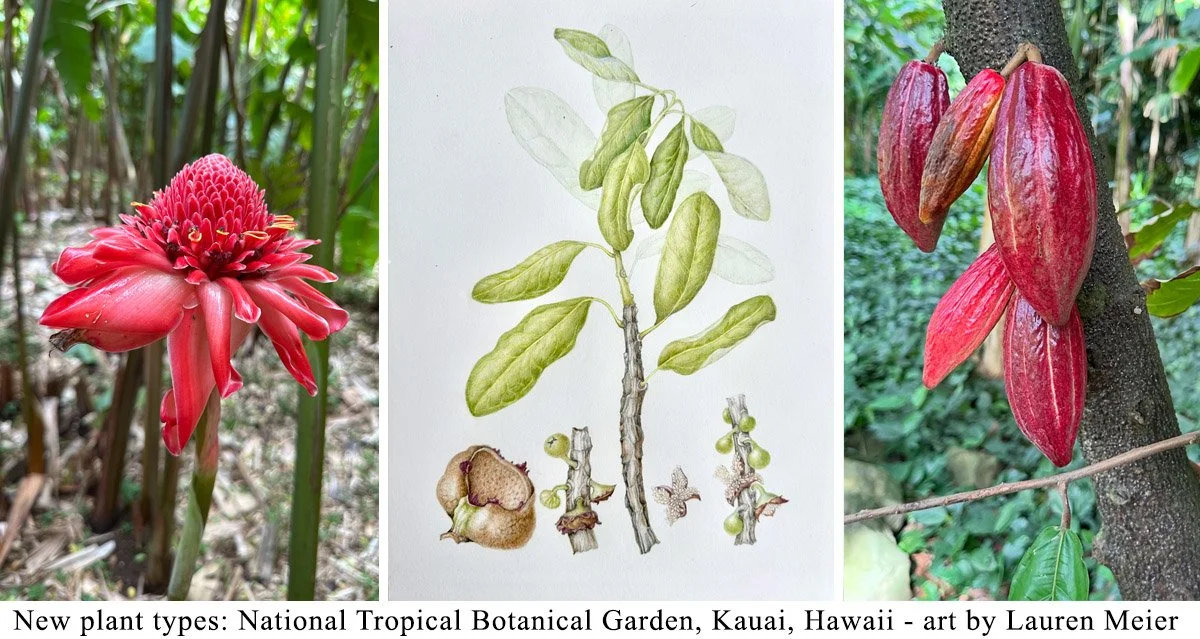
One of the strongest reasons to attend a retreat is immersion in botanical art. You can find new plant types and spend sustained time with a subject, return to it in different light, study its structure, get expert advice, and translate what you see into line, form, and color.
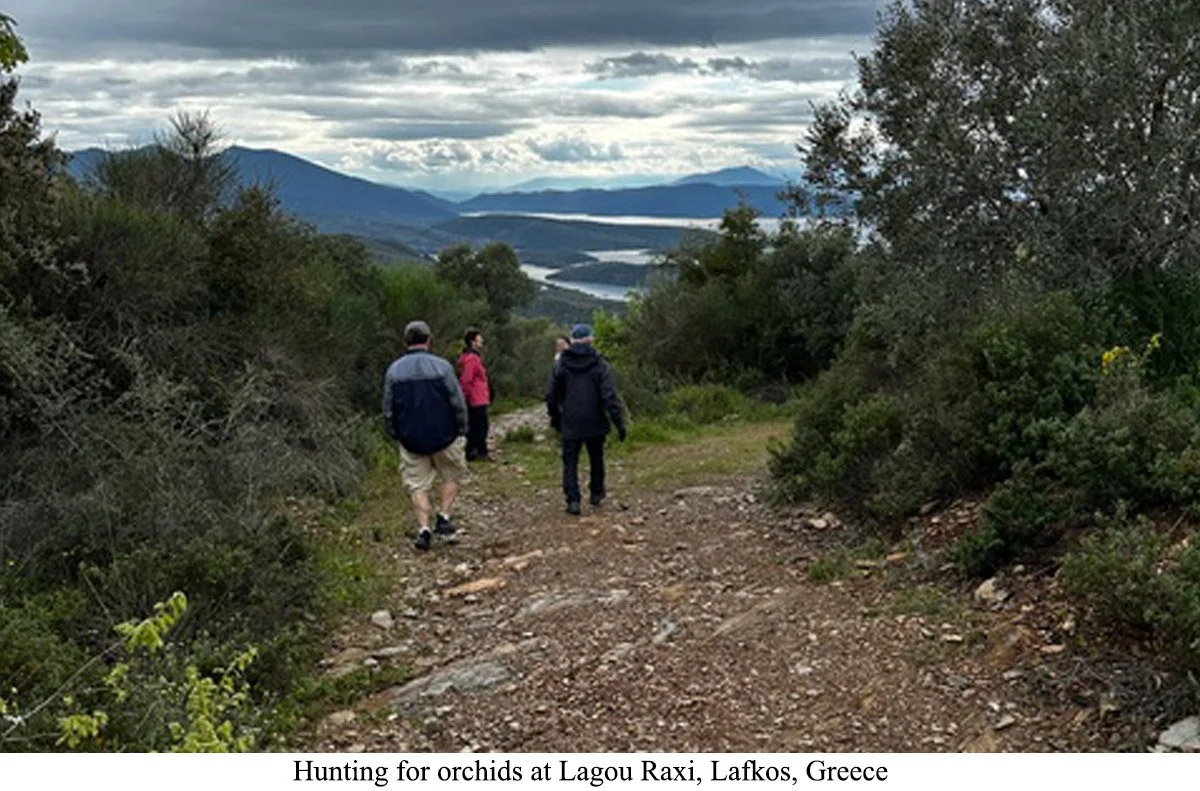
“The workshop in Lagou Raxi was focused on finding and drawing wild orchids. I developed an interest in wild orchids after learning that they grow on family land in Ireland. I was looking into orchid expeditions when this opportunity for orchid expedition and drawing came my way. I could not pass it up and had a great time.” (Joan Strauss)
“The most important part of the decision is visiting an area where there is plant material I might not otherwise have an opportunity to draw, and second, the quality of the instruction.” (Lauren Meier)
A retreat can also create the focused time many artists struggle to find. Away from chores, errands, work emails, and everyday interruptions, creative practice can finally move from “when I have time” to the center of your day.
Expert instruction is another major benefit. Experienced botanical artists, illustrators, or teachers can help participants refine drawing, composition, watercolor, colored pencil, pen-and-ink, and observation skills. Direct feedback can be especially valuable in ensuring accuracy as well as beauty. Several people said this was the principal factor in their choice.
“The most important factor in attending the retreat was the opportunity to study with these artists in person. The one in September was with Jarnie Godwin and the other was with Mary Dillon.“ (Gail Pearlstein)
The community element is often meaningful. Working alongside people who share your interest in plants and art can be energizing. Retreat conversations often stretch beyond technique into favorite gardens, field guides, materials, creative routines, and personal stories. For artists who usually work alone, that sense of connection can be one of the most memorable parts of the trip.
“The participating artists were mostly NESBA members . . . For them lodging, painting, and traveling together seemed almost like camp; they bonded there, and we have continued to communicate via a What’s App group.” (Rita Edmund)
“…the people you meet in the classes are wonderful! You develop a real connection with the other students, and people come from all over the world. In my class I met people from Australia. You learn about other places to study and share tips and techniques with people.” (Gail Pearlstein)
“Not everyone will be your ‘cup of tea’ but most people are focused on the work and the learning. You are also likely to have a new crop of international friends who you might well see at another workshop in the future!” (Joan Strauss)
Finally, botanical art retreats can offer personal renewal. Time outdoors, extended observation, and creative concentration can be restorative. A retreat may not only improve your art; it may also remind you why you wanted to make art in the first place.
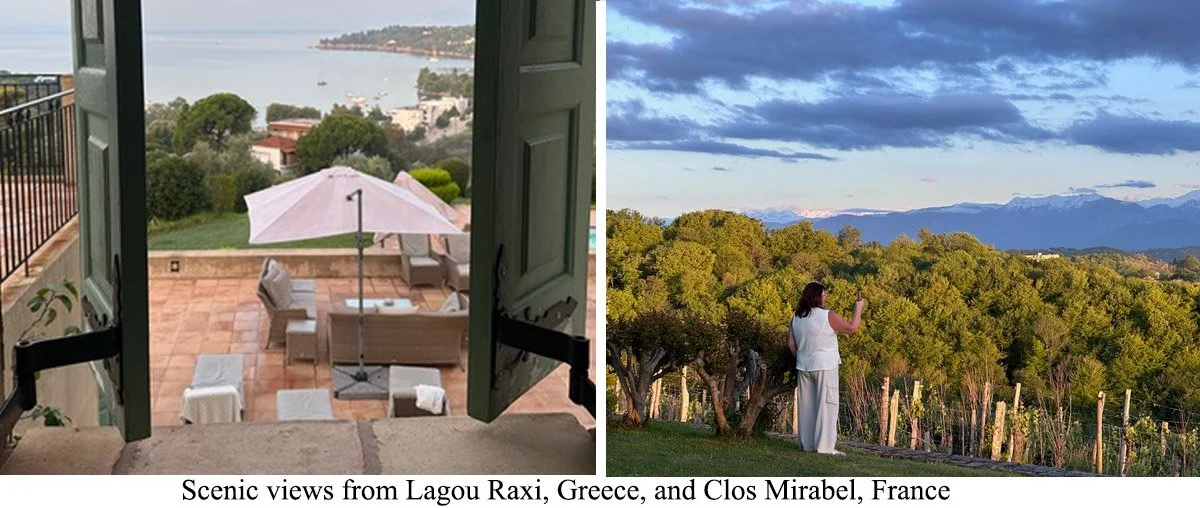
“I remember working away in a focused manner and looking up and being somewhat surprised I was in such a beautiful setting. I would just take in the view and feel calm.” (Joan Strauss)
What Else to Consider: Cost, Logistics, and Expectations
Cost. You will want to weigh the retreat appeal against the practical details. Tuition, lodging, meals, airfare or train travel, local transportation, garden or museum admissions, and art supplies can add up quickly. A retreat that seems affordable at first may become far more expensive once you itemize every cost.
Time is another consideration. Traveling for a retreat may mean taking vacation days, arranging care for family members or pets, stepping away from work, or postponing other commitments. Even planning the trip can be time-consuming.
Consider the physical demands. Botanical retreats can involve carrying luggage and supplies, walking through gardens, standing while sketching, working outdoors in heat or damp weather, or spending long hours at a studio table. Make sure the accommodations are suitable for you. Understanding the demands before you sign up will help you decide whether the demands of this retreat match your comfort level.
“I don’t like to share a room and managed to get a single. Some folks had to share a room, which can be problematic.” (Gail Pearlstein)
“You may want to think about how much night life or shopping you want nearby.” (Joan Strauss)
Creative pressure is part of the experience. A retreat sounds relaxing, but group settings sometimes bring comparison. Seeing other artists work quickly or confidently may stir up personal doubts. The best retreats encourage learning rather than perfection, but it is still wise to arrive with realistic expectations: you are there to learn, practice, and grow, not necessarily to produce a masterpiece.
Traveling with art materials can also be tricky. Liquids, sharp tools, paper, boards, finished paintings, and delicate supplies all require planning. You may need to think carefully about what to pack and how to bring your work home safely.
Questions to Ask Before You Book
Before committing, make a personal checklist or use the checklist at the end of this blog to help decide. What does the price include, and what costs are extra? Is the retreat designed for beginners, intermediate artists, advanced artists, or all levels? How much of each day will involve instruction, independent studio time, outdoor work, or travel? Does the schedule include enough downtime and rest for your needs?
It is also helpful to ask about materials. A short supply list may be easy to manage, but a lengthy list of specialized supplies will affect both your budget and your packing strategy. If the retreat includes fieldwork, ask what kind of terrain and weather to expect. If critiques are part of the program, consider whether you are comfortable receiving feedback in a group setting.
Most importantly, think about what you want to bring home. Are you hoping for finished artwork, new skills, travel memories, creative confidence, or connection with other artists? Knowing your own goal and the kind of creative experience you want will help you choose the retreat that best fits your needs.
Checklist
Add any additional questions that are important to you as you decide.
·What does the price include, and what costs are extra?
Is the retreat designed for beginners, intermediate artists, advanced artists, or all levels
What experience and qualifications do the instructor have?
How much of each day will involve instruction, independent studio time, outdoor work, or travel? Does the schedule include enough downtime and rest for your needs?.
Ask about materials. A short supply list may be easy to manage, but a lengthy list of specialized supplies will affect both your budget and your packing strategy.
If the retreat includes fieldwork, ask what kind of terrain and weather to expect.
If critiques are part of the program, consider whether you are comfortable receiving feedback in a group setting.
Do you have special needs such as accessibility or dietary requirements? Can the venue meet those needs?
Do you want to bring a spouse, partner or a guest with you? What complexity will that add to your planning?
Most importantly, think about what you want to bring home. Are you hoping for finished artwork, new skills, travel memories, creative confidence, or new friendships?
Happy traveling, whether nearby or far away.
Addendum
A Few Venues Attended by NESBA members
Clos Mirabel
“Clos Mirabel is in the southwest of France, near the Pyrenees mountains. This was a factor for me in choosing a place because Clos Mirabel was established as a specific place to take weeklong creative classes. They have set up a wonderful studio space. Accommodations are very comfortable. They have an organic farm as part of the experience where students can pick specimens to paint and where they prepare fabulous French farm to table meals. Their staff are delightful. And the owners Xavier and Rachel speak English very well and are helpful in arranging transportation and experiences off the premises. Some people bring a spouse or a guest, and they might be looking for things to do while the student is occupied with their art. Clos Mirabel is easy to get to. From abroad people fly to Charles De Gaulle in Paris and then from there they go to the in-country air France terminal for a flight to Pau. Some things to consider: CDG is not the most user-friendly airport. The terminals are large and take a long time to navigate. You need to give yourself plenty of transfer time to get from the international terminal to the local in country terminal. Alternatively, you can take a train from Paris to Pau. “(Gail Perlstein studied with Marry Dillon and with Jarnie Goodwin)
“The hotel arranged for pick-up and drop-off from the airport in Pau. The estate is in a residential/rural area so there were no stores nearby. The town of Pau is within walking distance but pretty much straight downhill. (Joan Strauss attended the Marry Dillon retreat: Pam Harrington studied with Catherine Waters in 2025)
Skiathos, Greece
Mary (Dillon) rents a villa in Skiathos. She had family members help with food which was fantastic. The villa is a short walk to the main road which has frequent busses from one end of the island to the other. The town is adorable with lots of shops and restaurants. The view from the villa was beautiful. Skiathos is a short plane ride from Athens. There are also direct flights from the UK. (Joan Strauss)
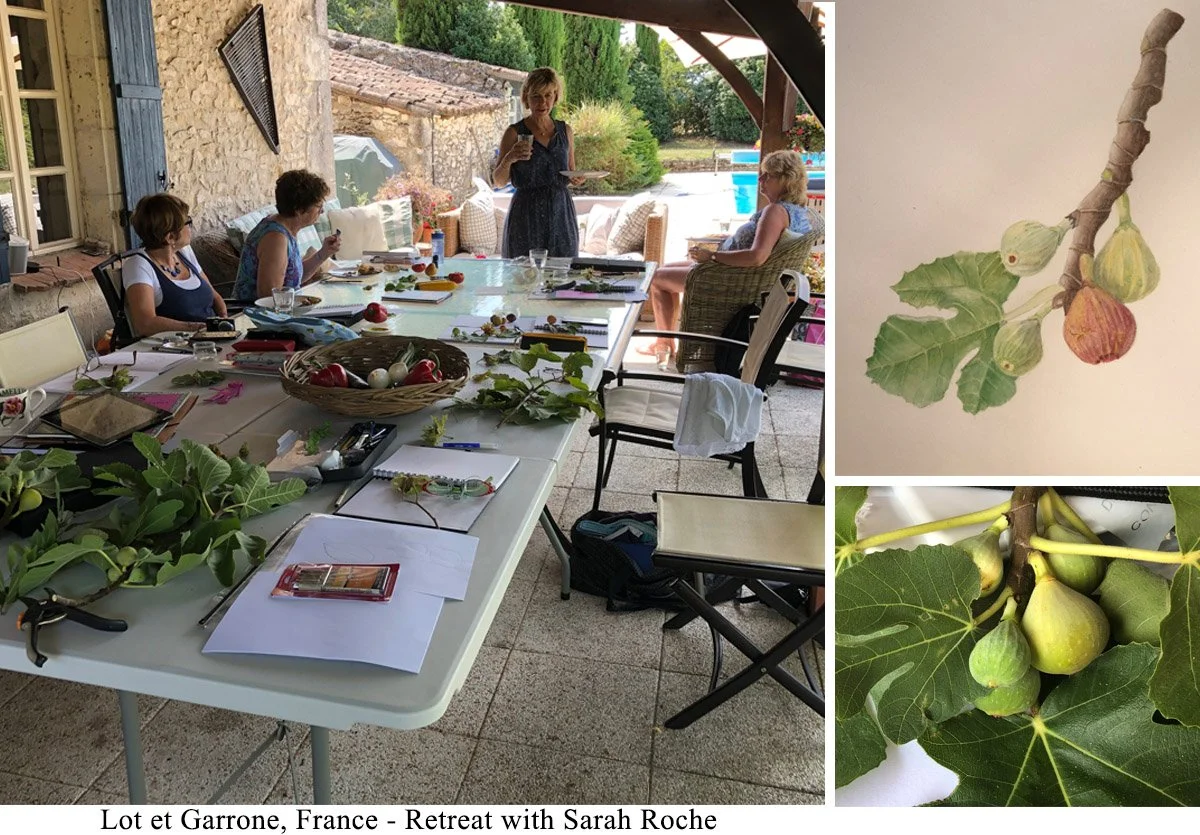
Lot et Garrone France
Mass Hort classes are held at Sarah Roche’s home and accommodations are at Haven on the Hill in the Lot et Garonne in southwest France.
“After years of thinking I didn’t want to spend a week with 13-14 other participants at Sarah’s, I finally decided to plan a vacation with John (husband) around her class in a village to the east of Bordeaux. The other participants stayed at Haven on the Hill, a large farm with rooms, meals, a car and van driven by the farm owners, and a barn set up for evening artwork…Expenses included travel, hotels, a rental car, the cottage fee, dinners, and the class fee. The entire week was so well planned, with drawing and painting at Sarah’s house for part of each day, trips to local village markets, dinners, and visits to an artist’s studio and a water lily garden. Transportation was provided although I sometimes drove myself. “(Rita Edmond 2026, Diane Piktialis 2019, Pam Harrington 2018 and Lauren Meier have all gone to this venue)
Wendy Hollander: Draw Botanical Illustration Intensive, KAUAI, Hawaii
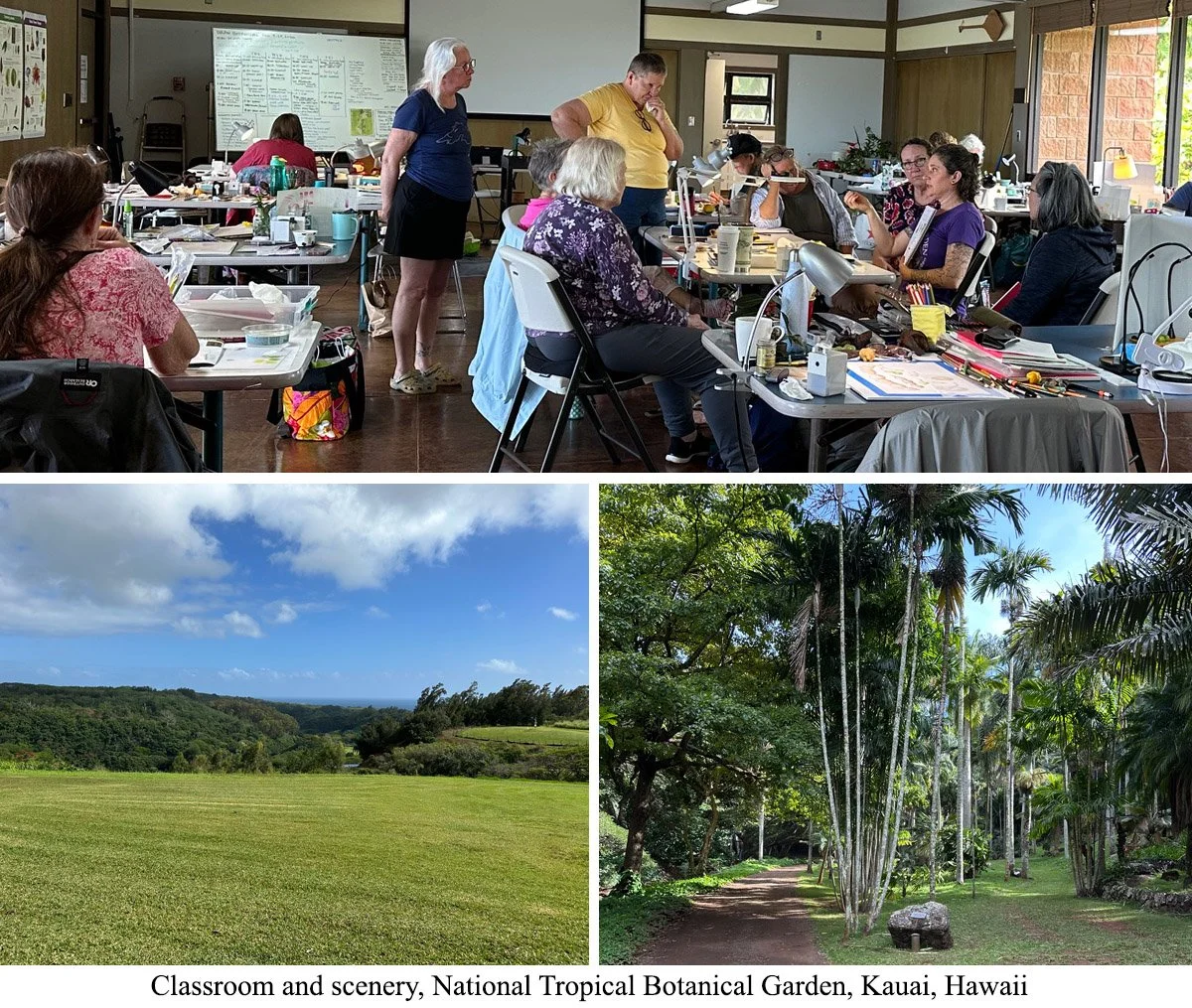
The “venue is a large classroom at NTBG (National Tropical Botanic Garden) headquarters, Kalaheo, Kauai, Hawaii, a beautiful space with kitchen, restrooms, view of the coast, access to the landscape and to the science work happening nearby (herbarium, seed lab, research center, rare book room, etc.). Overnight accommodations are on your own – I rented a condo in Poipu, and a car is required to get to NTBG. Transportation to Kauai requires flying into Lihue airport (no direct flights – transfer in LA, Seattle, or Honolulu, etc.) and renting a car.” (Lauren Meier twice attended multi-week workshops)
Lagou Raxi
“The Lagou Raxi workshop was with colored pencil artist Helen Ainsworth…(It) was focused on finding and drawing wild orchids. Lagou Raxi is a 10-year-old property again with a gorgeous view of water and mountains. It is a ~4-hour drive from Athens and options are rent a car, hire a car or take the bus. We hired a car going to and took the bus coming back. The town of Lafkos is a medieval hilltop town, and you really feel like you are back in time walking the streets there. All but two meals were provided and the food was quite good.” (Joan Strauss)
Nova Scotia with Margaret Best
Pam Harrington attended weeklong retreats in 2024 and 2026; Doris Sheils has as well.
Note: For information on many current and future retreat and travel opportunities go to the ASBA website . Most botanical art retreats coming up are listed there.