By Beverly Duncan
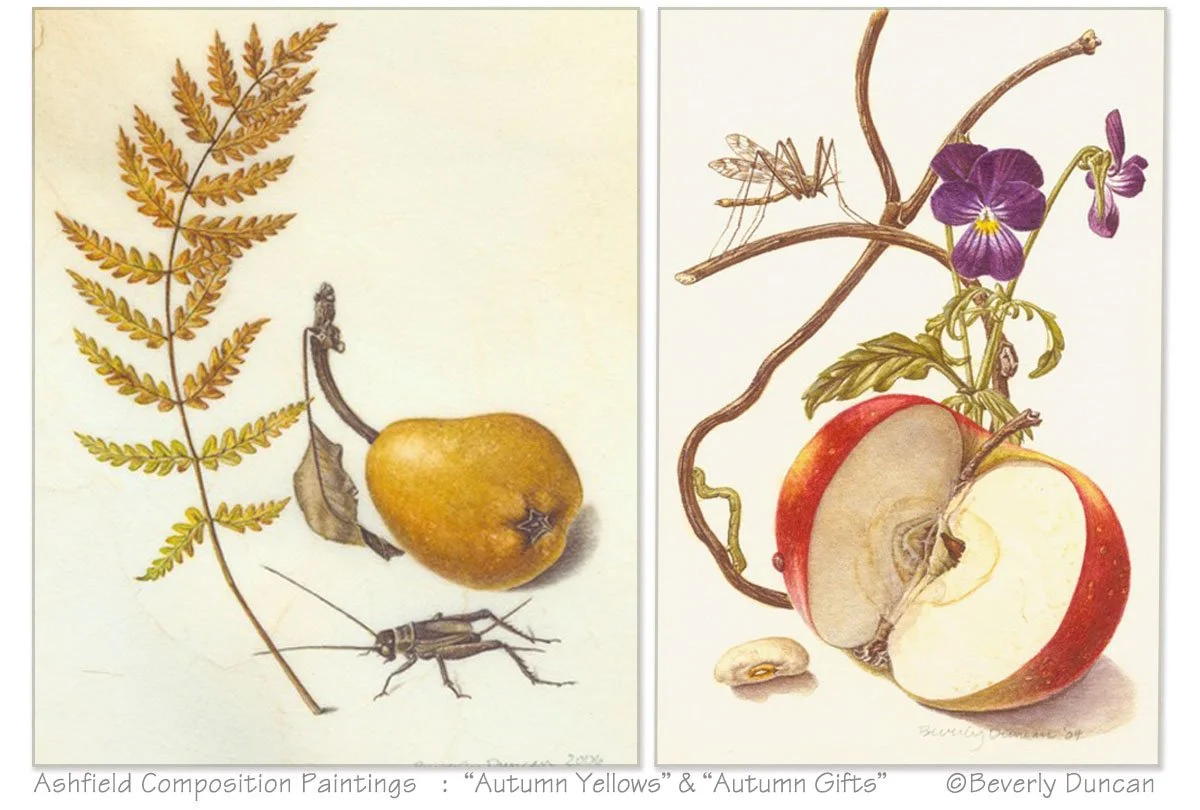
As a botanical illustrator and painter, I have spent much of my professional life working on illustrations that are plant-based. My artwork has been included in over 45 books, numerous garden magazines, an herbal calendar, wallpaper, and note cards. I continue to work on such projects when presented, while also working on more serious botanical paintings and teaching.
At the end of 2024, out of the blue, a friend-of-a-friend asked if I’d be interested in painting three bigger paintings. The client had seen some of my paintings at the home of a mutual friend and followed me on my Instagram account.
Before thinking about proposing a commission, the client had planned on purchasing three big reproductions of Audubon birds, all with rich blues in the paintings. The challenge was to move from that choice to something botanical.
The client lives in Santa Barbara, California. We spent a few weeks discussing ideas; I was thinking of a more traditional botanical art presentation based on west coast plants and animals. I had lived in California for ten years and have visited my relatives over the years, so I have some understanding of west coast flora and fauna. Then the client began to mention plants she loved that were from her earlier years growing up in western Massachusetts as well as those she especially loved in her California life. What to do? I was temporarily stuck! How was I to create a composition with flora and fauna from very different environments!?
How did I finally decide on the format for this commission? As botanical painters we are serious about our compositions on a page, usually depicting one plant. Groupings of plants generally need to be explained via title or accompanying text, especially if the plants portrayed come from disparate parts of the world or a mix of native and non-native flora or fauna!
For years I had been doing that, painting a mix of plants and animals in my small Ashfield Composition paintings. The overall theme, carried throughout my numerous paintings, was about my personal environment, by season, color, cultivated or found in the wilder woods around me.
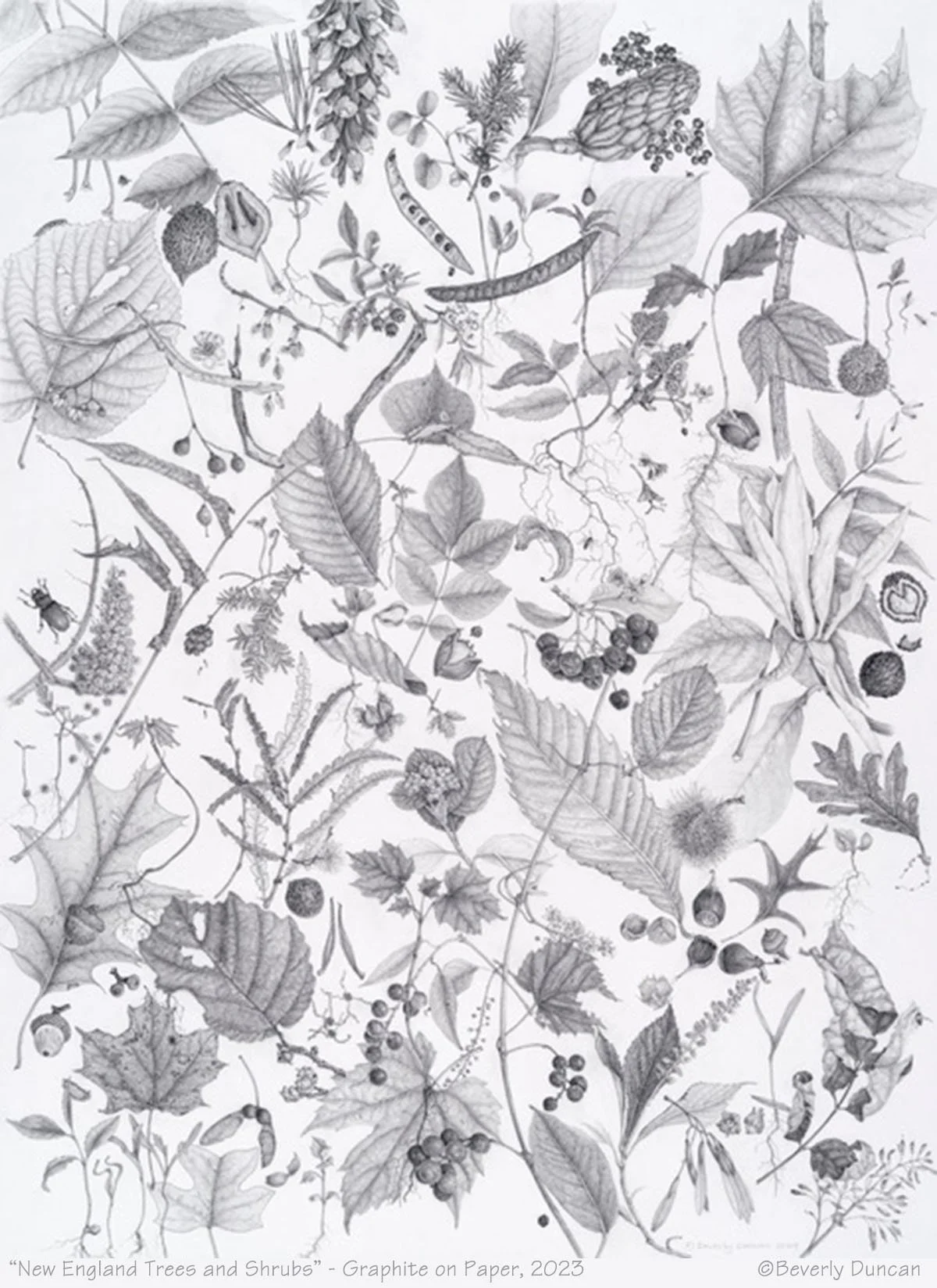
As well, I had developed this graphite drawing, adding native trees and shrubs, parts and pieces, scattered about, filling a full sheet of watercolor paper in a more informal, intuitive composition. The client had admired this image on Instagram.
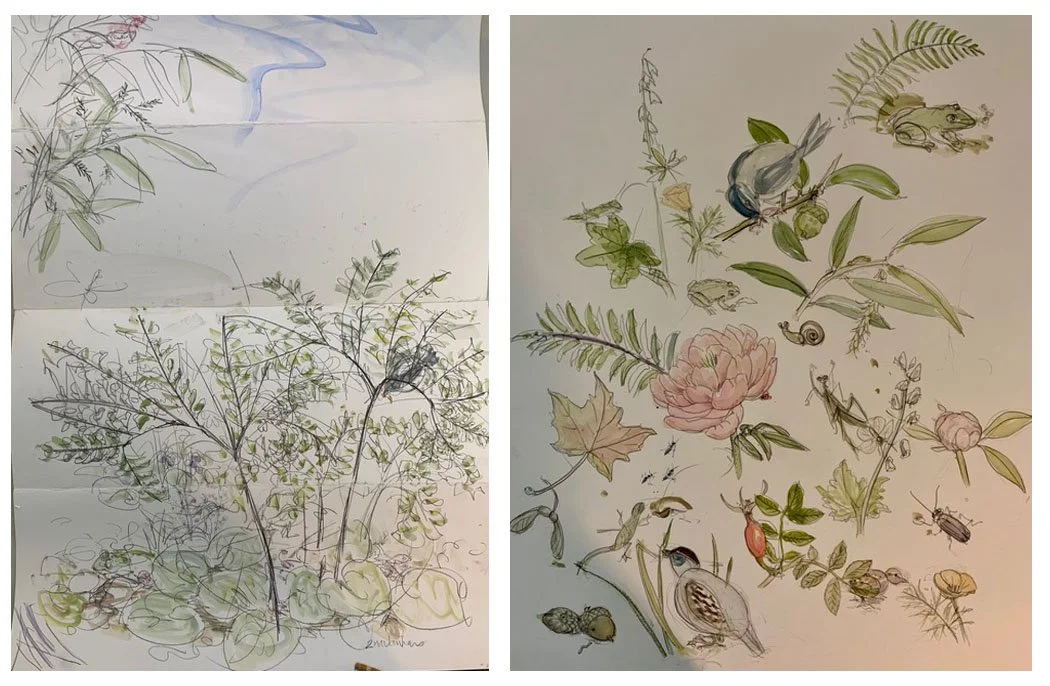
From mid-December on, as the client and I texted back and forth, I worked up two different sketches in a larger format. One set was quickly rejected by me as too restricting, image on left. The sketch, image on right, was getting closer to our discussions and to what I had been doing over the years and would be happy working on. I would include both west and east coast flora and fauna, native and non-native, even invasive! Images would be scattered over the page. I would work in either pen or pencil outline, with color detail added, in a looser style, depicting flora and fauna, parts and pieces, scattered over the page. The client, with great trust, gave the go-ahead to start on the first composition!
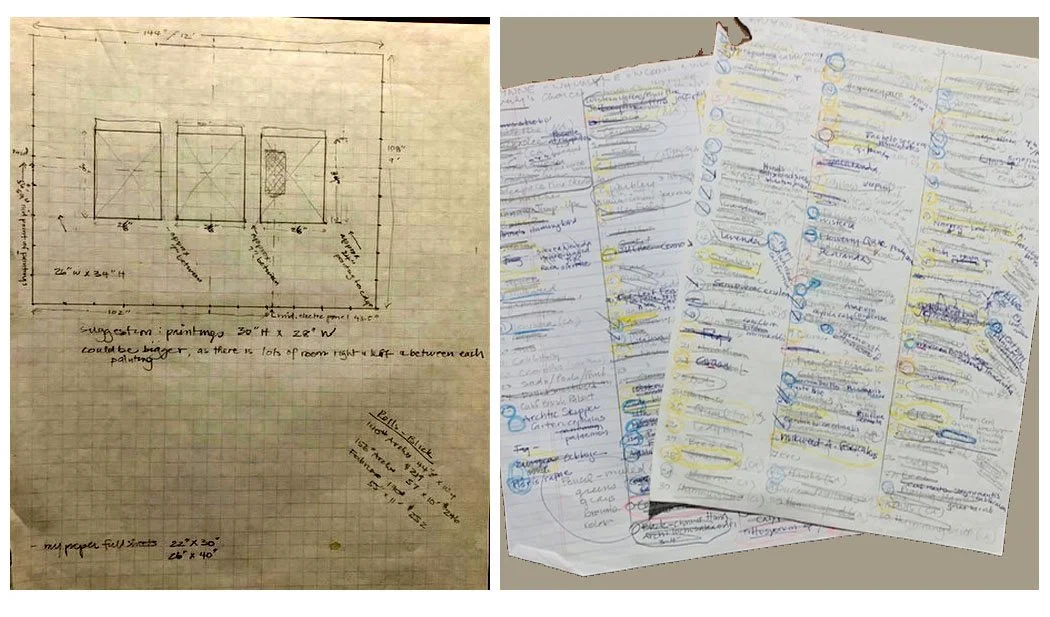
First, though, the size of the paintings needed to be agreed upon. The wall where these paintings were to hang was 9 feet high by 12 feet wide; the client had sent numerous photos of the space. A preliminary sketch was worked up for both of us to understand the space and size limits. I checked my watercolor paper and found I had large sheets of 26”x 34” Saunders Waterford 260lb Hot Press Paper which would work for this job. The client was wanting three paintings, but I wisely set the limit at two.
I was making lists of potential plants as our discussions progressed. A color-coding system helped to distribute specimens over the two paintings based on specimen color, whether natives or cultivated, so on. As these lists suggest, many plants and animals would be needed for these complex compositions.
One of the client’s requests was that I select some flora and fauna in blues and blue-green hues, taking us back to the original three Audubon prints with predominant blues. I researched and found native plants with fruits of beautiful blues, purple-blues and foliage of the rich dark greens the client loves. The client placed much trust in me throughout this project!
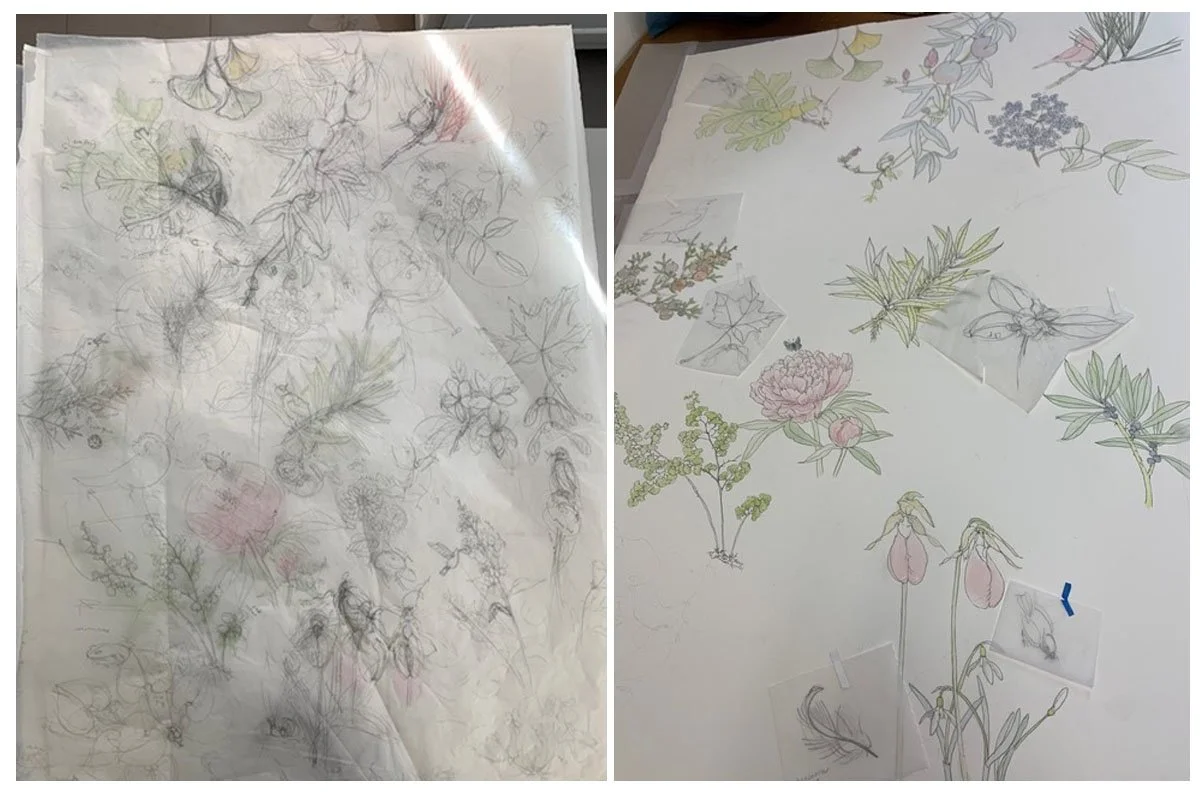
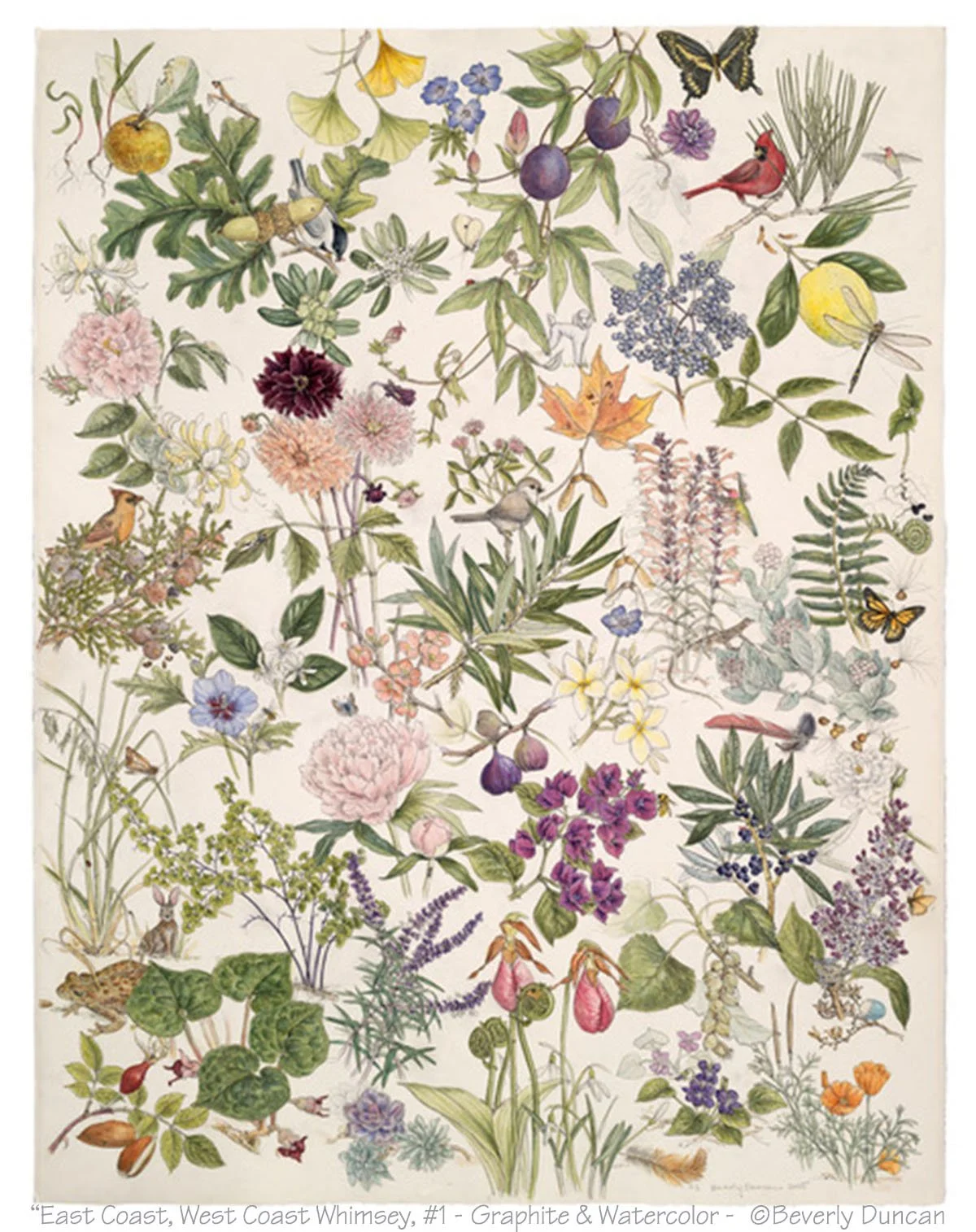
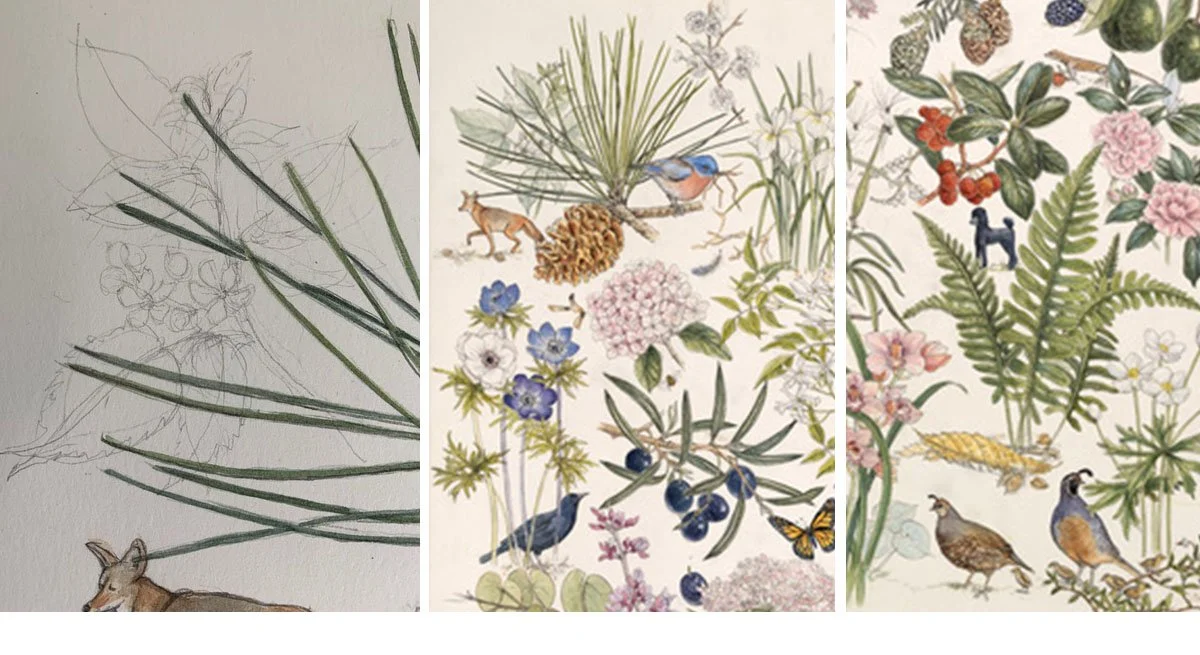
I began by working up very rough pencil sketches on tracing paper cut to size. I worked up other sketches and moved the images around, lightly taping them in place. After a good sense of what might evolve, I jumped in and laid down the first plants and animals based on those mentioned by the client. I started with light graphite, then when I was as sure as I could be, I strengthened the line and added a first round of washes. I had to be very open and flexible as the client texted me daily with new plants and animals that she remembered and would like to have included. She asked me to add illustrations of the family’s two poodles; photos were sent. I began to add plants that were native to the west coast that she hadn’t mentioned, because I love the natives and found some very beautiful species to include. I also added east coast natives to the mix, as well as plants that were related to our mutual friend who is a gardener for pleasure and for her events establishment. This commission had become a personal, visual history.
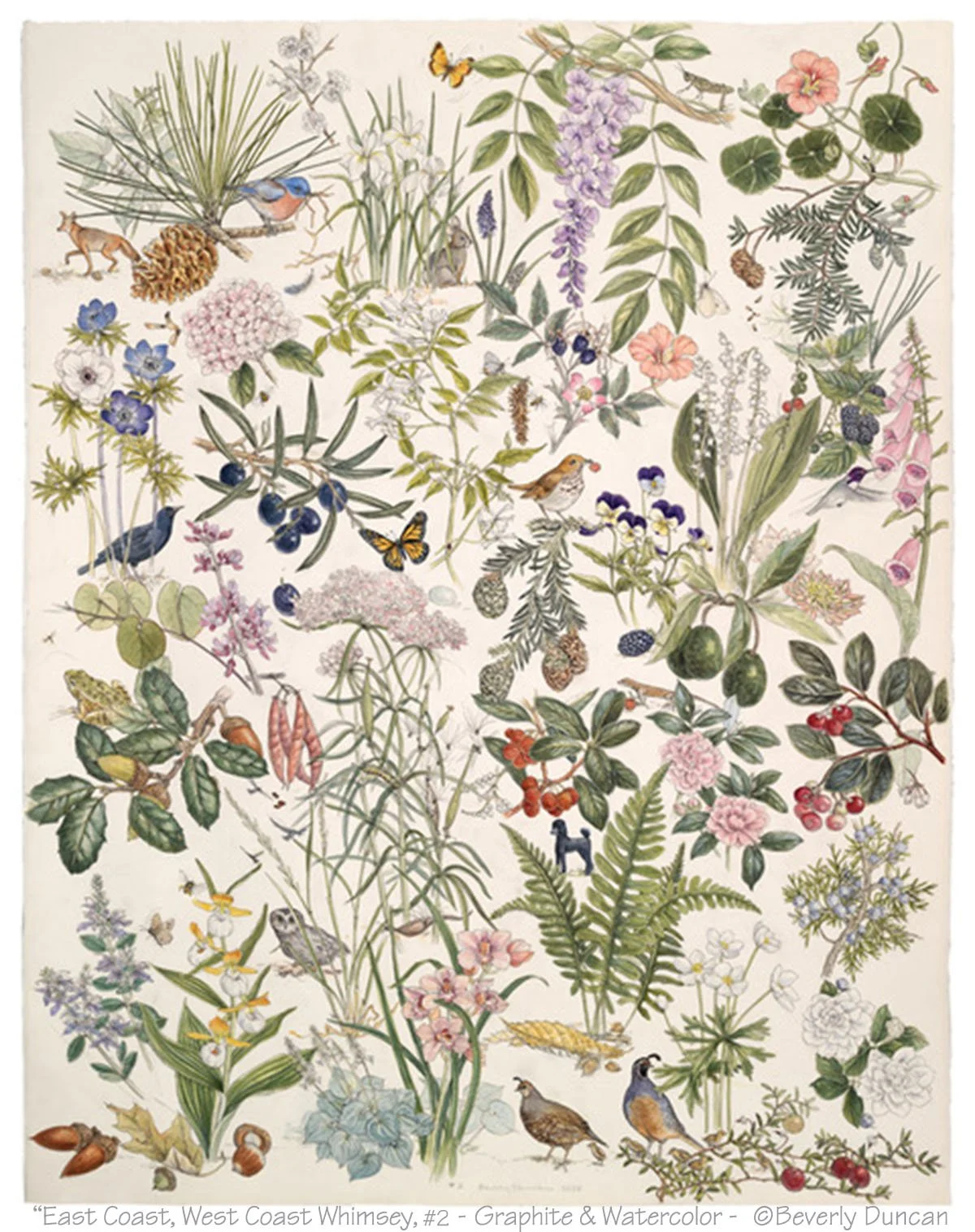
Only after I had reached close to 95% finished on the first painting, did I begin work on the second sheet. Back to my lists - I worked up a tracing paper drawing and began by placing the plants and animals that were the most important, then adding plants that hadn’t yet been included and adding the second poodle. I added a last plant, just mentioned by the client, on the day that I declared the project finished!
In early March, after having the finished paintings professionally photographed, they were shipped to California by FedEX in a big, art-shipping box. I had originally thought that these sheets of paper could be rolled and shipped in a tube but found that to be a poorer alternative. I included a completed typed list of all the flora and fauna within the paintings, with common and scientific names. Much research was involved!
The client was very pleased with the artwork. We had become acquainted only by texts and phone calls and she had only had glimpses of the artwork throughout the three-month project. I was finally able to meet her a few months later when she traveled east to visit our mutual friend. How satisfying and pleasant to meet this person with whom I had become acquainted!
To see more of Beverly’s artwork here are two links: