Picking Apples in Geneva

Many botanical artists took note of the beautiful United States Department of Agriculture (USDA) catalog of American fruits and nuts when it was published in 2021 by Atelier Editions. The catalog contains selections from the 7,500 watercolor paintings commissioned by USDA’s Division of Pomology from 1886 to 1942.  In addition to apples, which comprise over half of the USDA’s watercolor collection, it contains citrus, berries, melons, and drupes, even nuts, and it illuminated the work of  many female artists.

Because my final project in the Wellesley Friends Botanical Program is apples, I bought the book immediately. (Continued…)

Nature Journaling - Observe and Learn

Nature Journaling - Observe and Learn

By Ellen Duarte

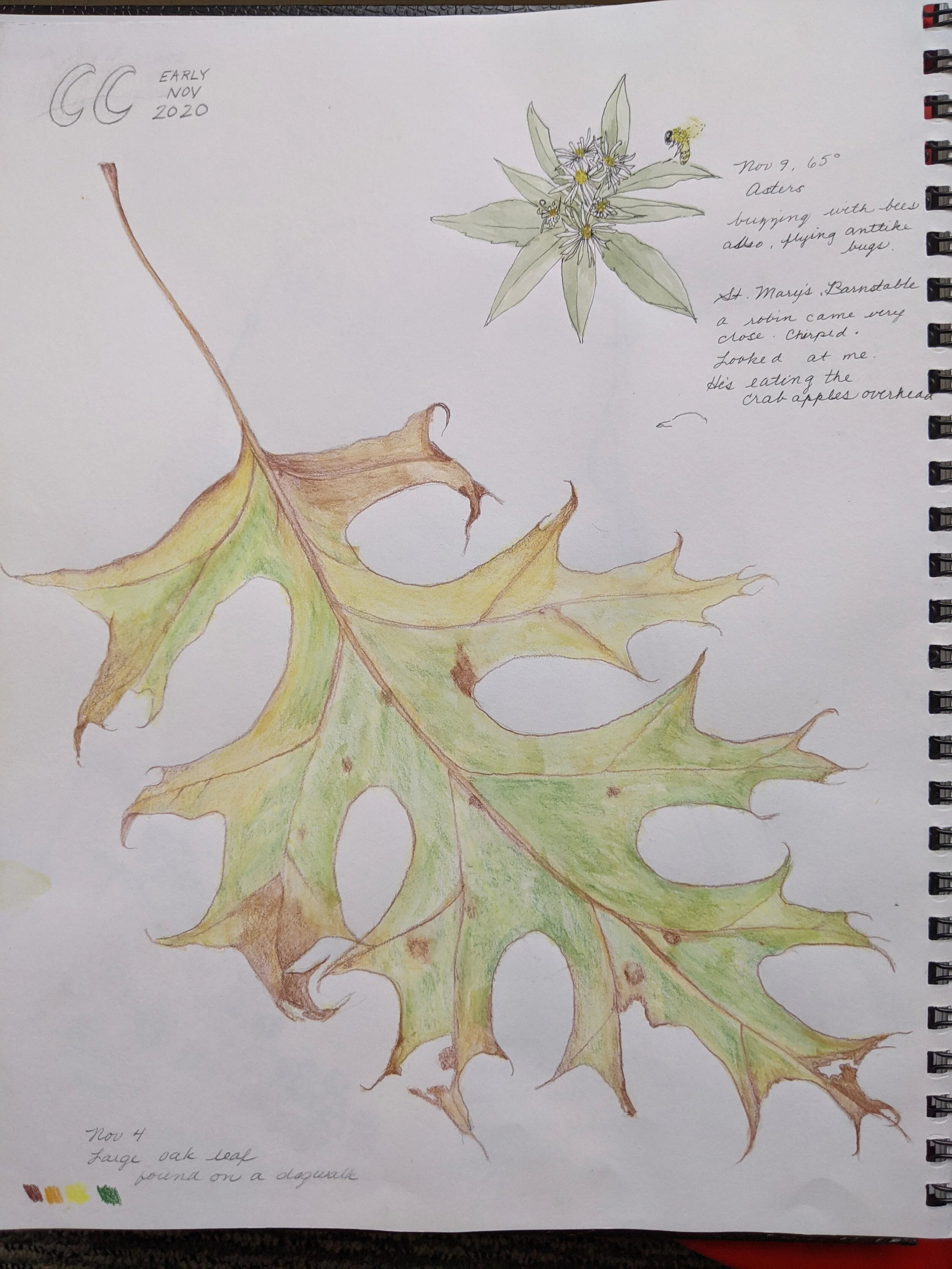
Last fall I offered a class at in nature journaling at a local art center. I had only dabbled in journaling in response to my interest in edible wild plants. But when planning to teach a broader perspective, I was delighted at the possibilities. During the six week course, we touched on plants and flowers, trees, birds, and butterflies, and utilized graphite, colored pencil, ink and, of course, watercolor. It is almost overwhelming what can be included in a nature journal, but what a thrill!

Color: Challenges and Rewards

Color: Challenges and Rewards

Color: Challenges and Rewards By Susan Fulton

Looking out my window at the snow covered subdued outdoor palette of winter, it is hard to believe that in a short time spring will arrive with its glorious bulbs, flowering trees, and emerging buds. There is something uplifting and joyous about being outside enjoying the riotous colors of spring. Clear bright color has long attracted observers to art—Titian was known as a “colorist” of great renown and the Impressionists, who used bright colors on a white canvas, continue to draw large crowds of observers. Modern botanical artists are pushing the boundaries of traditional plant portraits by presenting larger and more lush interpretations of plants in a wider variety of mediums. Deciding how to illustrate a plant and what colors to use are some of the biggest challenges facing us as botanical artists. Realistic color applied in a way that mimics a plant is one of the objectives, but how to achieve this in a painting?

Winter in New England: What’s a Botanical Artist to Do?

Winter in New England: What’s a Botanical Artist to Do?

A wonderful thing about living in New England is the annual seasonal changes that come almost like clockwork. Spring, summer, and fall bring the natural world to life. Green becomes a dominant landscape color. Garden perennials and native wildflowers begin to grow. Bulbs pop through the soil after a long-needed rest. Trees and woody shrubs blossom. Summer brings blooms of glorious colors from gardens to hills, and valleys, and even the seashore. Then comes fall, with it’s stunning foliage in every shade of red, orange and gold. The days get cooler and shorter until one can’t ignore what’s coming : winter, the season of grays and browns.